WATCH THE SKIES TEN YEARS ON

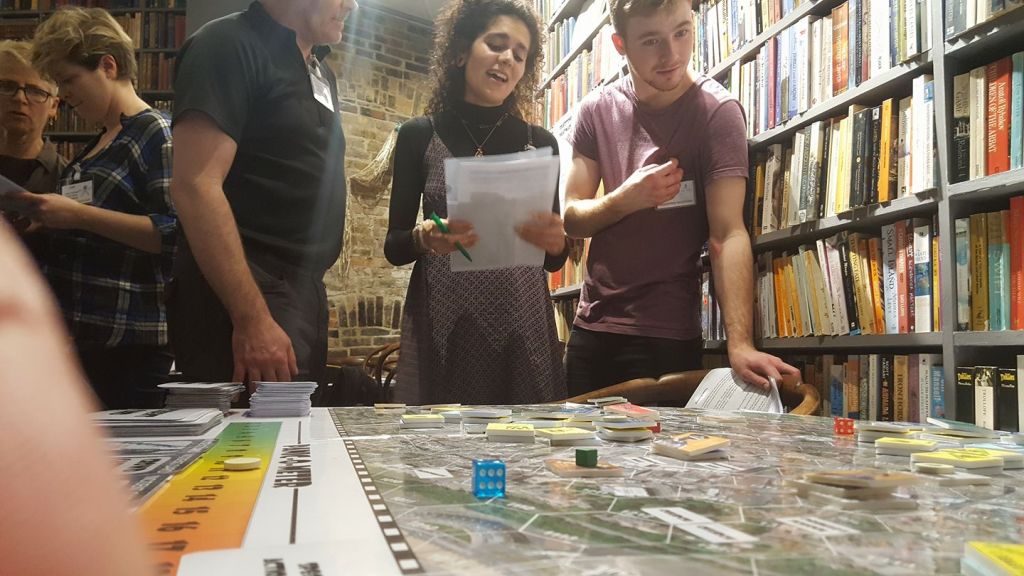
It has been 10 Years since I ran the first Watch The Skies Megagame in April 2014.

Thanks to the lovely chaps at Shut Up And Sit Down, the game got a good review, and opened the fun and laughter that is megagaming to a wider audience, ultimately a global audience!
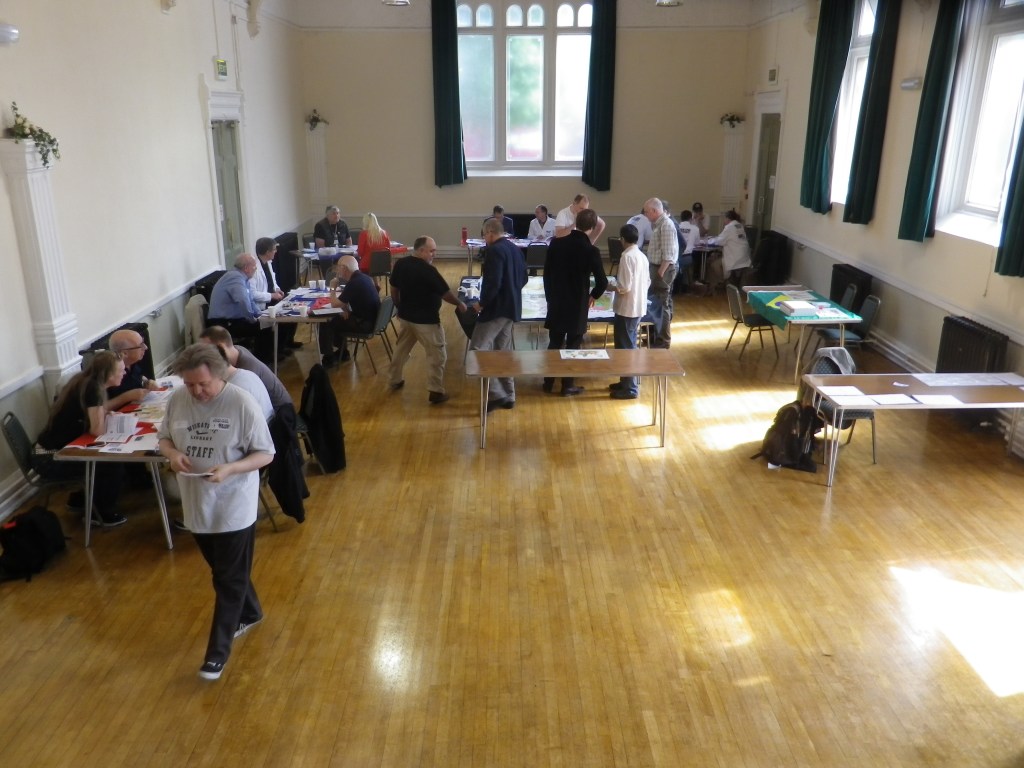
Watch The Skies wasn’t my first megagame, it was my seventieth (and 38th unique game design), but it was still a surprise when it took off and was so popular. I don’t think it is my best megagame design but it did draw in a load of elements from previous designs that, taken together worked reasonably well. In this case the UN element was taken from my Crisis In Binni megagame, the national teams from the political element of both Crisis in Binni and War in the West (formerly Springtime for Hitler) and the use of a central operational map from a large number of previous megagames, such as Crisis In Britannia or Sengoku. From the design point of view the structure is very simple – multiple teams with their own objectives, interacting with each other and deciding on actions to respond to one or more crises. This is one of the standard megagame structures (but by no means the only structure). Complexity of emerging gameplay and the game narrative comes, as ever, from how the players choose to play. There was no ‘traitor mechanic’ and no obvious reason for players to be warlike or not warlike. This simplicity opens the gameplay up to a huge variety of possibilities.
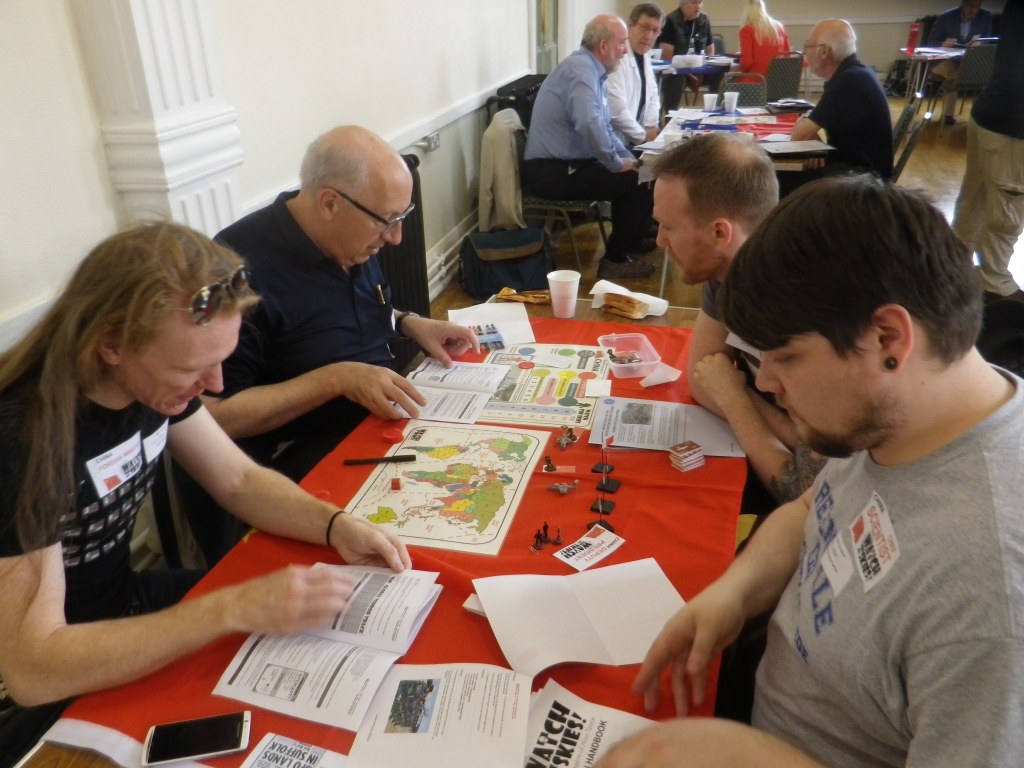
The irony about the success of WTS was that the game was actually cobbled together really quickly. I’d had the basic idea about ten years previously, inspired by my love of the classic PC game, UFO Enemy Unknown, written some brief notes and not much more. Then in 2014, Megagame Makers had a spare slot in the programme which needed a filler game. So the WTS idea got dusted off and, to be honest, thrown together in a couple of weeks. Fortunately, the SUSD team had never seen a megagame before and so probably didn’t notice the rough edges! I was terrified that they would notice and was expecting the game to be ripped apart in their review. Amazingly, they liked it!

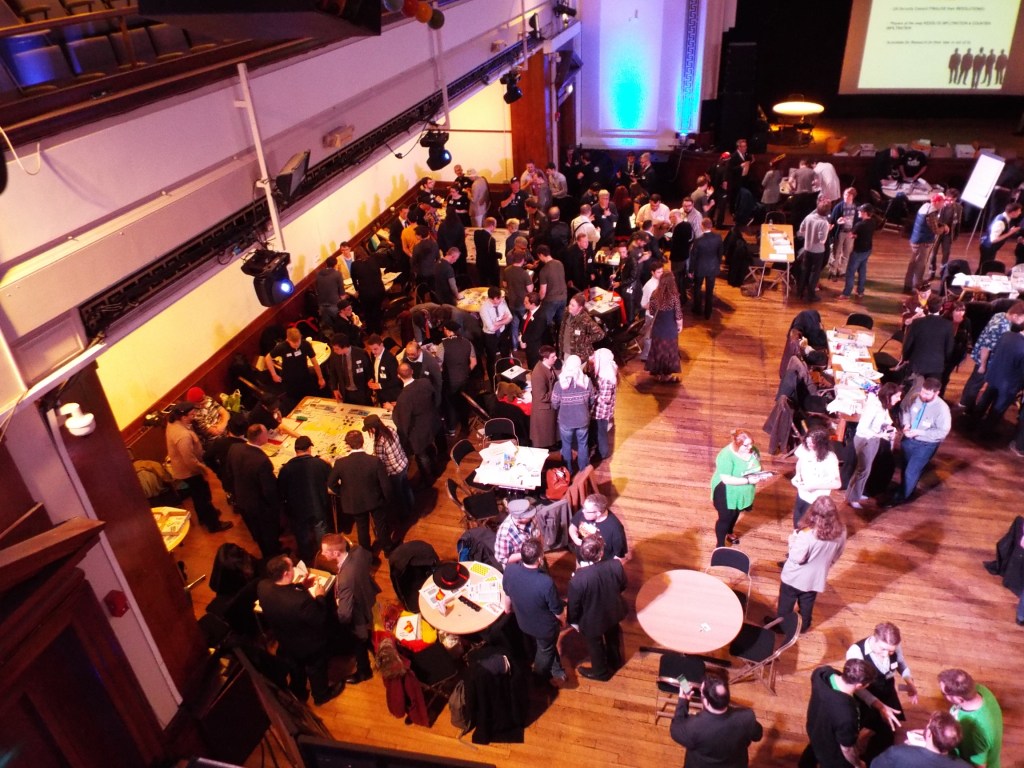
Since the game became popular we (perhaps foolishly) ran three sequels where we tried to get all the people who wanted to play Watch The Skies into a single game. WTS2, 3 and 4 were all 300+ player games and complete nightmares! There are those who came away from that experience wanting more, but personally it cured me forever from wanting to do in person games on that scale ever again! That said, we did run the Wide Area Megagame, Urban Nightmare: State of Chaos (UNSOC) in 2017 that involved 600 players – but they were spread over 12 separate but linked megagames. I will write about the trauma that was UNSOC another time.
It became quickly clear that the demand for megagames in general could not be met by me and others in Megagame Makers alone. We had been trying, for some years prior to WTS to spread the word – running games in Leeds and other places, so we knew there were people who were both interested and capable of running their own games in their local area. We had for a long time previously put example game materials on line for download, but this seemed to need something a bit more complete. Hence the idea of megagame download packs – starting with Watch The Skies.

The first problem I encountered with producing a download pack was that writing something for someone else to use is massively different to writing something for friends or for myself. Blindingly obvious I know, but still an important lesson. Answering queries from people who have downloaded WTS forced me to explain a lot of things that seemed ‘obvious’ about what megagames are, what they are not and what is normal in the genre (at least for me). It also helped me improve (I think) how I write game rules, handbooks and briefings – in the past I would always be on hand to explain the things I hadn’t explained very well in a handbook – now I had to try to explain things properly in the materials the first place!

Feedback from users has been (and continues to be) so helpful in that and I still get emails from users and continually refine materials for clarity.

The original game materials were fairly quickly revised and a new edition of Watch the Skies, originally described as Watch the Skies Lite was developed. This removed a lot of unnecessary complexity in the original, clarified the game process and included a step-by-step turn by turn guide for the Control team on how to actually set up and run the game. It was also a chance to improve the game materials and the map significantly, bringing aspects of the players’ ‘control panels’ to the main map table – making the game easier to run with a small number of Controls. This quickly became the standard version and, with only minor edits remains surprisingly popular with over 600 copies downloaded to date.

One of the main limitations for repeating the game though was the alien objectives. Many groups wrote their own versions of the game with very different alien objectives – and in the large 300 player versions I added more complicated alien political sub-games, as well as cults, corporations and cetaceans.

But the basic game remained the one generally available. In 2021 we added the Alien Scenarios pack to address this – creating ten new variants of the Alien briefings to give the game some new life and to allow for a degree of surprise for players who have played before.

In 2015, I predicted that people would be bored of Watch the Skies by about 2016. It just goes to show that prediction is famously difficult – especially of the future!

I have no idea whether we will still see Watch the skies being played in ten years from now, but even if not, its been a fun journey so far, and perhaps it is the right time to release the updated 10th Anniversary version to include additional gameplay options I’ve thought of and even more alien scenarios.

NEWS: Watch The Skies 10th Anniversary Edition is due for release in October 2024.

Playing With Toy Soldiers

As everyone knows, recreational wargaming with toy soldiers (or ‘miniatures’ are they are euphemistically known)has been around for at least a couple of centuries, and arguably much longer.

It has been the rise of Warhammer, created in 1983 by Bryan Ansell, Richard Halliwell, and Rick Priestley, that has gradually brought the practice close and closer to the status of a mainstream recreational activity – and not just one played by socially-awkward pre-teen boys. Film stars and influencers now often openly admit to a fascination with painting and playing with colourful toy soldiers in the now well-developed fantasy setting.

Over a slightly longer period than this, Dungeons & Dragons has similarly come into the light in a huge resurgence both in playing and in public awareness. And again, role playing with toy soldiers is the attraction.

My wargaming with toy soldiers dates back to before D&D and before Warhammer, to the era more influenced by Don Featherstone’s 1962 book “Wargames” and published rule-sets like the Wargame Research Groups’ Ancient Wargames rules. But don’t panic – I don’t intend to go into a tedious nostalgia trip at this point.

There are still many thousands of wargamers who continue to wargame historical subjects outside the Warhammer universe, and in recent years they too have flourished (perhaps there is some synergy between the various tribes of toy soldier fans) – with many hundreds of sets of wargame rules and thousands of different miniatures in metal, resin and plastic on the market. Anyone who likes to play games with toy soldiers can pretty much play in any period in human history (from stone age to the present day) and beyond.

So what?

Every so often I get the toy soldiers out and remind myself of the pleasure they give me. Most of my gaming activity is professionally designing, writing and facilitating serious games on often very serious real-world subjects. This is stimulating and engaging and a love my work. And sometimes it can even be described as ‘fun’ (though we like to call in ‘professionally satisfying’). However, all of this creative designing of games to a specific purpose leaves little room for genuine playfulness.

And so I look for some specific things when I get the toy soldiers out which may be different to some (if perhaps not all) other wargamers.

  1. I’m looking for my toy soldier games to give me the opportunity to create for myself, or myself and my friends, a believable narrative. Like many forms of creative entertainment, the willing suspension of disbelief principle applies here just as much.
  2. If I’m playing an historical game I generally want it to reflect my reading of the history. Wargames that are just themed in an historical period, can possibly be fun, but fundamentally unrealistic and focussed only on generating a ‘fun game’ are what Paddy Griffith (founder of Wargame Developments) used to call ‘mere games’ – that is games that contain no discernable element of historical simulation.
  3. If I’m playing fantasy or science fiction, then I’m looking for internal logic. So many games in these genres lack that internal consistency that they to can also be described as ‘mere games’ – they can be so abstract or random that it is hard to find that important believable narrative.
  4. I want something easy(-ish) to play and which moves on at an entertaining pace. I spent far too long in my early game designing and wargaming life writing and wrestling with over-complex, slow moving game systems in search of ‘total realism’. Of course, as is now well understood, there is a spectrum of playability-realism (recognised officially in the MoD’s Wargaming Handbook, no less!). And for my own recreation, I’d say I’m probably around two-thirds of the way towards the ‘playability’ end of that spectrum. EDIT: As John Salt has just pointed out to me – the trope that playability and realism are in some way mutually exclusive (hence a specturnm) is also often a cover for poor or lazy game design. It is, of course perfectly posisble to have a playable and realisic wargame – and this shold be the aim of every designer of wargames. On reflection I would perhaps suggest that the spectrum perhaps is more one of deciding how much abstraction you are allowing into your game. Finding the correct balance of abstraction and complexity for the purpose of your game is, I suggest, a core element of good game design. Of course you’ll have had to decide what that purpose is, and that is a longer discussion.
  5. Personally I need multi-player games. Two-player adversarial wargames leave me cold. And, when you think about it you can see that creating an interesting narrative is so much easier to do so with other people jointly, which leads me on to…
  6. Ideally I look for a cooperative wargame. Cooperation to achieve a goal is very satisfying, possibly the most satisfying way to enjoy playing with toy soldiers. And there are those who say “…but surely war is all about winning. Adversarial play is essential so you know who won.”. To a degree – but the adversary does not need to be another person – it can be a situation, an AI, a card deck or a scenario. Or the game can be GM’d like a D&D session. So many other ways of playing wargames with toy soldiers than just two players facing each other across a table chess-like. And the growth in cooperative board games is perhaps evidence that I am not alone. Plus I don’t care who won.

My criteria for what I look for in a wargame with toy soldiers are, of course, highly personal. I recommend the reader ask themselves what they really look for in their toy soldier game and are the games they are playing really what gives them joy – or are they left feeling stressed, embarrassed or defeated by complicated, expensive games in which you are always beaten by your more experienced friend.

Elephants

For me the pachyderm in the playroom is painting toy soldiers.

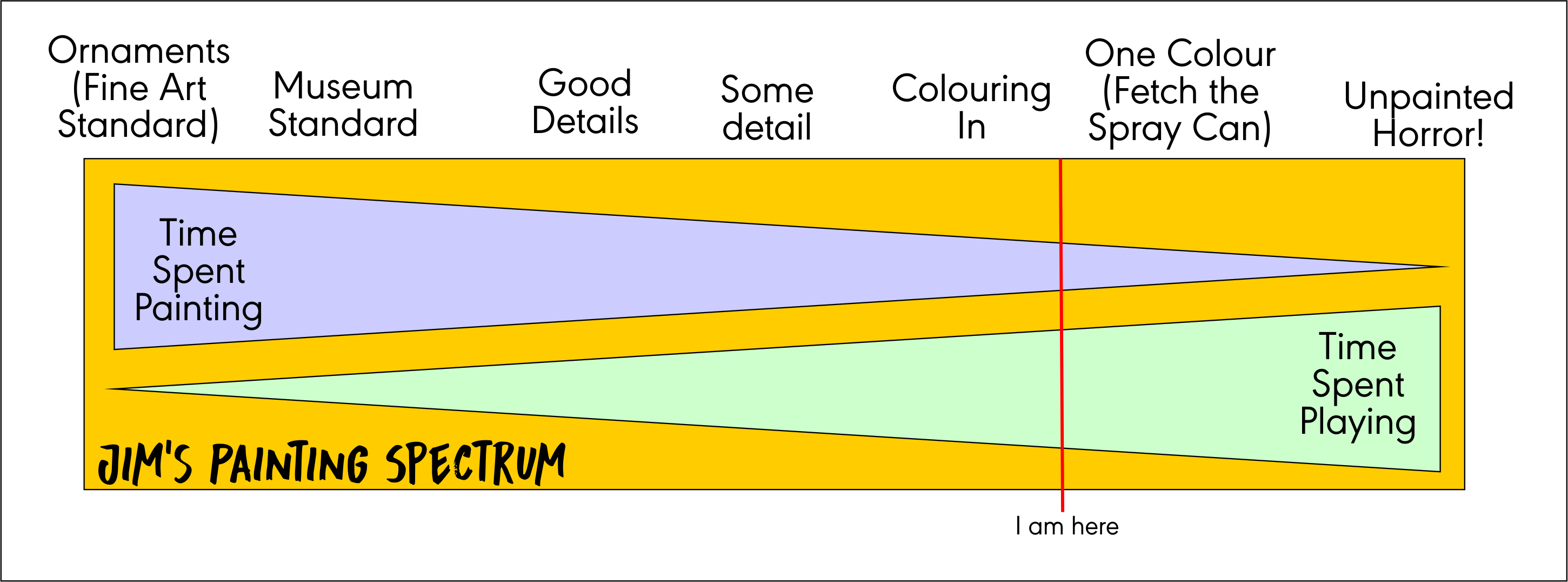
I feel that the toys are just representational markers, so painting them with loving (or even obsessive) accuracy has never been a priority. In my mind there is a toy soldier painting spectrum.

I often describe my painting technique as ‘colouring in’.

One of the things that can be discouraging, especially for newcomers, is the very high quality of toy soldier painting out there as seen in magasines or youtube videos. If you attend a wargames show like Salute in London’s docklands you will see tens of thousands of superbly painted toy soldiers. I usually find the experience dispiriting because I have neither the skill nor the patience to come even close to that standard.

However, do not be downhearted.

Those of us in the Toy Soldier Wargame Liberation Front say “Do not let those amazingly good painters oppress you with their talent and skill! Embrace the spray paint can – armies can be both Red AND Blue!”

Of course it almost goes without saying that for those of you with slightly deeper pockets and an unfulfilled desire for painted armies, ebay is your friend. Never be shamed into thinking you have to paint your own toy soldiers!

As ever, it is the game is the thing – everything else is there to help you enjoy playing and creating entertaining emerging narratives.

Do whatever works for you!

BRINGING ON THE NEXT GENERATION

DO’S AND DON’TS IN A NEXT GEN MENTORING WORKSHOP/SESSION
(Mostly Don’ts!)

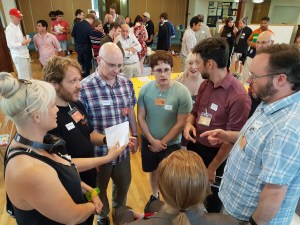
For those of us who have been doing the game design thing for a long time (too long some might say) it is (to me at least) important to make efforts to bring on the next generation of game designers and encourage, support and mentor those who might want to learn from our experiences. This might be helping out with playtesting, running workshops for new designers or presenting at conferences, workshops etc. There are some things I’ve observed (and done myself) that are helpful, and perhaps less than helpful, when supporting the next generation of game designers.

I have come up with a number of insights from my experience that might help game design grognards [Definition : ‘grognard’ someone experienced enough to know better.] when they are working with, supporting or mentoring new designers. These are not rules as such, more like guidelines.

1. MAKE SURE EVERYONE IS HEARD.  If someone is quiet then encourage them to participate by asking their opinion.  BUT be careful of ‘searchlighting’ (i.e. putting them in an uncomfortable spotlight).

2. Don’t mention someone’s appearance.  Ever. Either referring to those present or as part of an anecdote (“I met this really good-looking man the other day”).

3. Don’t mention someone’s age.  Either directly or inferred.  Especially be VERY aware of your own assumptions about youth & gender and implied inexperience.  I.e. “Good idea young Jim-lad” is patronising at best.

4. Personal banter is risky.  You may know another member of the group really well, but continually referring to that closer relationship (especially with banter and ‘in jokes’) is potentially exclusionary for the other participants.

5. Keep your Flak guns silent.  Shooting down stupid ideas is not allowed.  Also do not shoot down dumb questions.  Dumb questions are better than dumb mistakes later. [Definition: ‘Flak’ is an anti-aircraft weapon, used for shooting down enemy aircraft].

6. Do not explain how you would do it better.  If you are the expert in the room it is a given that you know how to do it, you have nothing to prove.  Instead guide the participants towards their own solutions by skillfully using open questions.  Also your solutions or methods may not be the best (or only) approach – be open to learning yourself.

7. There are brain cells in the room.  The participants are intelligent and bring knowledge and experience.  It is better to assume they already know something before you explain it to them.  “Are you familiar with the events of the Munich Crisis?” gives them a chance to say “Yes it was the subject of my doctoral thesis” BEFORE you launch into a long (and no doubt fascinating) exposition.  In short, do not ‘mansplain’.

8. DO STOP TALKING.  No really, please stop. Mentoring is not a casual conversation.  Also when you do speak, keep it SHORT and RELEVANT.  This is a genuine challenge for the experienced and knowledgeable subject matter expert who is bursting with experiential anecdotes and wisdom.  Rigorously self-check with regard to relevance, and if in doubt save it for the book/blog/podcast.   “When I play wargames with the great Peter Perla” is not relevant in the mentoring context.  Reference other experts, naturally, but only to signpost their work.

9. Obscure references do not help development.  Especially with an audience new to the field.  However, respectfully check in with them.  For example – “Have you heard of a wargamer called Don Featherstone?”  <blank looks>  “Well, he was a famous wargame writer in the 1960s and 70s and he always advised….”  OR <nods of recognition>  “Don Featherstone always said…”.

10. ACRONYMS ARE EVIL.  Designed to provide a helpful shorthand, like technical jargon, acronyms often work as a tool for excluding the uninitiated – and can work brilliantly to alienate and exclude.  Avoid using them at all in sessions, or, if unavoidable ideally PAGBITS  (Provide a Glossary Before Introducing The Session) or explain them on first use.  

This might look like a ‘Top Ten’ but I’m sure there are a lot more than 10, so feel free to add your thoughts in the comments!

Rules of Engagement

I have become increasingly interested in how we make sure that the game experience is the best and at the same time ensuring diversity, inclusivity and good behaviour.

I hope to write much more on this soon, but in the meantime I thought this might be a good place to share the new Stone Paper Scissors commitment and ground rules for behaviour at games we organise and run.

Documents like this are not cast in tablets of stone, but act as a baseline – becomeing refined and, if necessary, expanded as circucumstances change or as a result of experience.  We also aim to keep the ground rules as simple and clear as possible.

What guidelines like this must not become, in my view, is a sterile policy document created for the sake of form. It must (and in this case does) actively reflect day to day practice and be a realistic reflection of what we actually do.

Much of this has been influenced by the Derby House Principles, and by the standards set by the Swedish Sverok codes of conduct.

STONE PAPER SCISSORS GROUND RULES

WHAT YOU CAN EXPECT FROM SPS

  • to have a professionally facilitated and managed game experience.
  • to make your own choices within the game and its rules
  • to be listened to both in and out of games.
  • a safe friendly environment free of physical, verbal, and emotional harassment.
  • to not be subjected to aggressive, argumentative, racist, sexist, transphobic and homophobic behaviour or language.
  • to have your property left alone.

WHAT WE EXPECT FROM PARTICIPANTS

  • to participate as fully as they can.
  • to participate within the framework of the game provided.
  • to listen to other participants both in and out of games.
  • to contribute to a safe friendly environment free of physical, verbal, and emotional harassment.
  • to not be aggressive, argumentative, racist, sexist, transphobic or homophobic in behaviour or language.
  • to respect other participants’ property.

In order to keep our events safe and successful, attendees are expected to respect the ground rules. When you attend, you hereby agree to respect the rules above.   Participants who are unable to meet the expectations above (especially with regard to behaviour) may be asked to leave without refund.