The idea for In Case… was inspired by the Swedish Government’s recently published public information leaflet, “In Case of Crisis or War,” which encourages citizens to think practically about preparedness. By turning this often daunting topic into an engaging game, we hoped to spark meaningful conversations and help individuals develop a sense of readiness.
The Inspiration: Practical Preparedness Meets Gamification
The Swedish government’s leaflet lays out practical advice for surviving crises such as armed conflict, natural disasters, and power outages. Its straightforward approach to preparedness resonated deeply, highlighting the gap between what people should know and what they do know.
The leaflet’s focus on actionable items—what to stockpile, how to communicate during a crisis, and how to stay safe—formed the conceptual backbone of In Case…. We realised that gamifying this information could bridge the gap between passive awareness and active engagement, encouraging people to critically assess their own preparedness in a non-intimidating way.
The Concept: A Game About Conversations and Choices
From the outset, In Case… was designed to be more than just a game. Its primary purpose is to foster conversations, spark creativity, and encourage practical thinking. The challenge was to create a framework that was simple enough for non-gamers but engaging enough to hold everyone’s interest. The gameplay needed to strike a balance between realism and flexibility, allowing for imaginative solutions while grounding decisions in practical preparedness principles.
At its core, the game involves two types of cards:
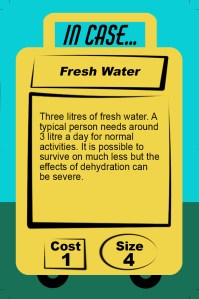
- Item Cards – Representing a range of practical tools and supplies, from water purification tablets to sleeping bags. Each card has a “size” and “cost,” reflecting its real-life limitations.
- Event Cards – Scenarios ranging from earthquakes to cyberattacks, each outlining a crisis and its potential challenges.
Players assess their real-life resources, build hypothetical “escape packs,” and use them to navigate various crises. The game incorporates resource constraints, mirroring real-world challenges where not everything you want can fit in your bag—or your budget.
Building the List: Identifying Key Items
The first step in the design process was to compile a comprehensive list of items that might be useful across different crises. This involved research into emergency preparedness guides, including:
- Government-issued resources like Sweden’s leaflet and FEMA’s recommendations.
- Personal survivalist blogs and forums.
- Input from disaster response professionals.
We aimed to balance everyday items (e.g., mobile phones, cash) with specialised survival tools (e.g., water purification systems, fire starters). The final list included over 70 items, reflecting a wide range of needs, from basic survival to community-level contributions without become too large a list for player to grasp easily.
Each item was assigned a “size” (how much weight/space it would take in a pack) and a “cost” (a relative value to simulate resource prioritisation). These mechanics add a strategic layer, challenging players to weigh convenience, necessity, and practicality.
Designing the Crises: Exploring Real-World Scenarios
Next came the development of the Event Cards. These were inspired by real-world crises, divided into broad categories:

- Environmental Disasters: Earthquakes, floods, wildfires, and hurricanes.
- Technological Disruptions: Cyberattacks on power grids, water supplies, or banking systems.
- Societal Challenges: Economic collapse, armed conflict, and pandemics.
Each scenario was designed to be plausible yet varied, highlighting different aspects of preparedness. For example:
- An earthquake emphasises immediate survival tools like first aid kits and torches.
- A cyberattack on water supplies makes water purification systems critical.
- A pandemic underscores the importance of hygiene and medical supplies.
The Event Cards also encourage players to think about community-level responses, prompting discussions about how neighbours might collaborate in difficult times. The idea here is to think of the crisis as ‘non zero sum’ – its is not just about our personal mitigations but how we fit in with our community in a crisis.
Testing and Refining the Game
With the core mechanics and components in place, the next step was playtesting. A diverse group of testers—ranging from avid gamers to complete novices—helped refine the game. Their feedback revealed key insights:
- Accessibility is crucial. Non-gamers appreciated the simple mechanics and conversational focus, which made the game feel more like a collaborative exercise than a competitive challenge.
- People enjoy discovering their strengths. Many players were surprised to find that they already owned several preparedness items, sparking pride and further interest in the topic.
- Discussions are as valuable as gameplay. Testers noted that the conversations prompted by the game often continued long after the session, encouraging deeper thinking about personal and community resilience.
Based on this feedback, we developed the rules further (mainly simplification), ensured the crises were relatable, and fine-tuned the item descriptions to include subtle hints about their usefulness.
Why This Game Matters: Impact and Potential
It is looking like In Case… has the potential to appeal to a wide audience, from families to community groups, educators, and even workplace teams. Its flexibility makes it suitable for different contexts:
- Families: The game can help parents and children discuss preparedness in a non-scary, engaging way.
- Schools: Teachers can use it as a tool to explore topics like resource management, geography, and social studies.
- Workplaces: Teams can use the game to build collaboration and problem-solving skills.
- Emergency Preparedness Groups: The game provides a structured yet fun way to educate communities about crisis planning.
The game also promotes practical action. By encouraging players to assess their real-life resources, it bridges the gap between theory and practice, inspiring people who might be concerned about an increasing volatile world to start building their resilience.
Lessons Learned from the Design Process
- Collaboration is Key: The game’s cooperative nature mirrors real-life crisis responses, emphasising the importance of teamwork and community.
- Relatability Matters: By focusing on everyday items and plausible scenarios, the game feels relevant to players’ lives, increasing its impact.
- Simplicity is Powerful: Easy-to-learn mechanics ensure that anyone, regardless of gaming experience, can participate and benefit.
Looking Ahead: Expanding the Game’s Reach
The positive initial response to In Case… suggests that it has significant potential for growth. Se are planning to make this available both in a physical form and as a downloadable print & play format on the Stone Paper Scissors website in the next few weeks. We’ve also been inspired already to consider some interesting future developments such as:
- Expansion Packs: Additional crises and specialised item sets (e.g., urban versus rural preparedness).
- Digital Version: An app-based version could reach a global audience and incorporate interactive features like personalised crisis simulations.
- Workshops and Training: Partnering with emergency preparedness organisations to use the game as part of educational initiatives.
Conclusion: Preparedness Through Play
In Case… is turning out to be more than just a game—it’s a tool for fostering awareness, building resilience, and strengthening community ties. By encouraging players to think critically about their resources and strategies, it potentially empowers them to face uncertainty with confidence.
 No Game Survives ...