Category: Uncategorized

OPERATION MARKET GARDEN – ‘JUST ONE ROAD’

My first operational megagame was run in 1988 and was on Operation Market Garden. It was written with extensive help from Steve Hale and Graham Attfield and many hours spent in the MoD Library (then just off Whitehall). It was a pretty ambitious first project, benefiting enormously from help from Paddy Griffith who managed to get us access to the Mongomery Wing at the Army Staff College in Camberley (the Montgomery Wing was demolished sometime in the 1990s at about the same time the Army Staff college joined the joint service Defence Academy in Shrivenham).

Why Operation Market Garden?
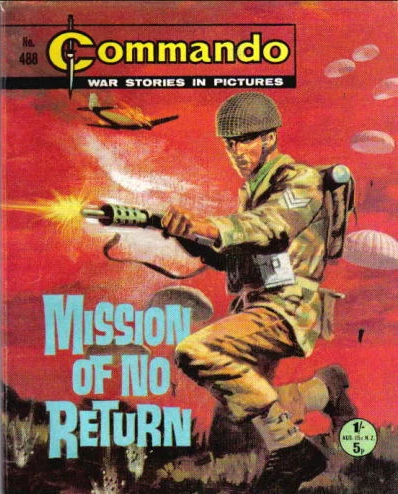
First it was reading Cornelius Ryan’s 1974 book, ‘A Bridge Too Far’. Inspired by the huge unfolding drama of the beleaguered British paratroops at Arnhem, let down by poor intelligence and bad planning, fighting to the last bullet to hold the bridge, while at the same time a desperate, ultimately doomed, effort was being made by 30th Corps to reach them in time. This was the stuff of the war comics of my youth – who could fail to be inspired!

Secondly, inspiration came from a little known Spectrum computer game called Arnhem. My friends and I had already played the huge SPI board game Highway To The Reich, with dispiritingly over-complicated rules, unreasonable numbers of counters and requiring far too many hours to play (not to mention our disagreement with the combat resolution) – but this little, simple, game captured the problems and events of the campaign elegantly in an hour or so (it even came with a little map to track the campaign!). And it only took up 48k of memory (yes – 48k, approx 1/20th of a small photograph on your phone!). You can still play this game here.
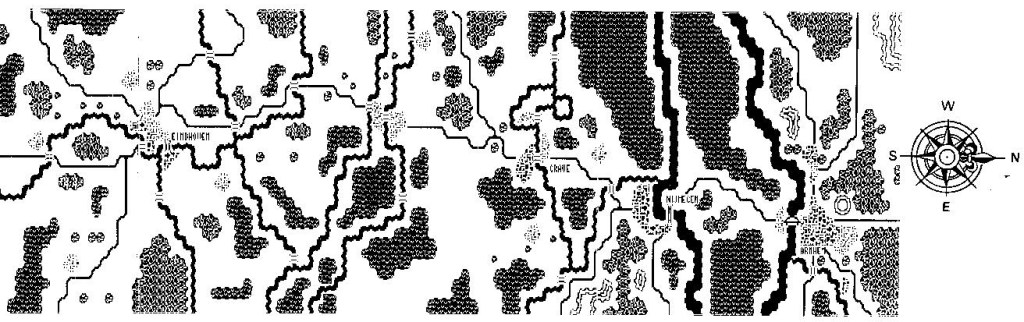
At the same time I was increasingly involved in the new wargaming activity of megagames (see previous posts).

So the little map created the idea of a big map and counter game, even though no rules existed for such a game. There had been a couple of map and counter megagames before (most notably Andy Grainger’s Kirovograd games) – but the complexity of Operation Market Garden was going to need some bespoke solutions. The fact that no-one had done this before did not seem like a deterrent at the time.

Months of research and trying out ideas later, we discovered that this wasn’t going to be quite the simple exercise we might have first thought. Not least because it started to look like it was going to be a 100 player game!

Design Challenges

Hindsight and surprise : The campaign is very well known to wargamers and military historians, and there is always the concern that :

a. The game will not replicate the cognitive challenge of the unexpected events of the real campaign.

b. Players could fairly easily use hindsight to know a lot more about their adversary than they would have known historically.

As it turned out these were less of a problem that we first thought.

Dealing with Surprise. In the game we covered the operational surprise aspect by only allowing the Allies to write orders and not allowing the German side to write orders for the first turn of the game.

Tactical surprise was harder in that some key surprises such as that the German forces near Arnhem were stronger than anticipated would be hard to replicate. We reached the conclusion that this might be an aspect of allowable hindsight – making the battle for the Arnhem bridges less one-sided and introducing an interesting what-if dimension. i.e. “What if British 1st Airborne Division knew they were going in to a hard fight?”. The military problem remains the same, but the conduct of the battle is very different for both sides. As it happened, this was probably the only major tactical surprise that needed much thought.
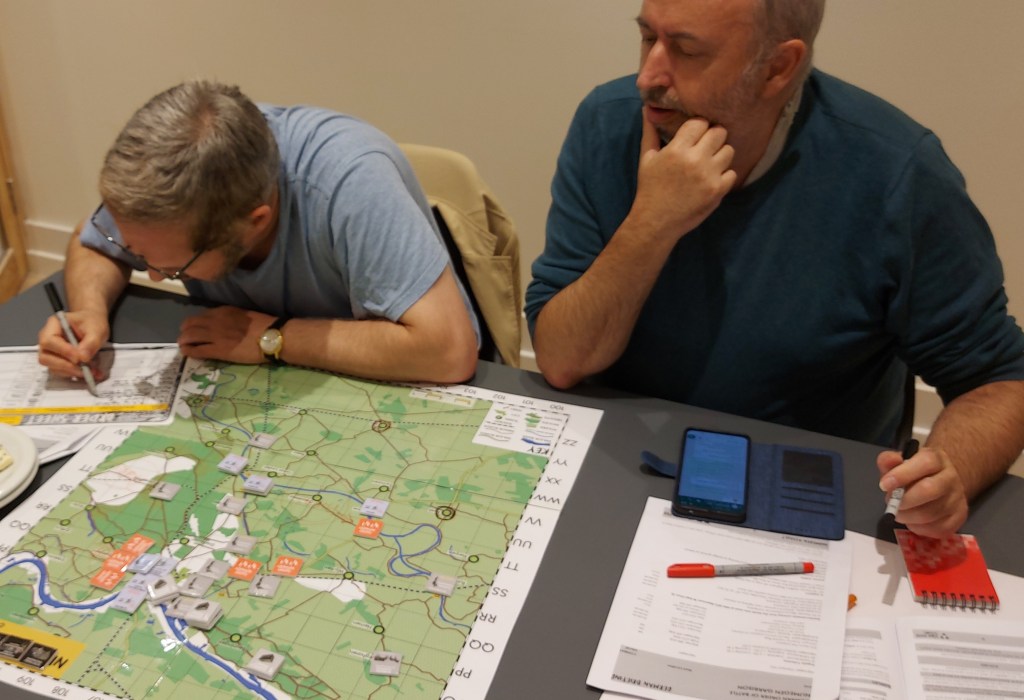
Dealing with hindsight. It turned out, as we did the research, that hindsight was less of a problem than we anticipated because wargamers (and even some military historians) turn out to only have a sketchy understanding of the conduct of the campaign at the operational level. We found lots of understanding of hard-fought individual actions, dramatic episodes and broad-brush ideas of the forces involved. However, identifying all the German forces involved turned out to be a significant challenge (Helped considerably when Robert Kershaw’s absolutely excellent ‘It Never Snows In September’ came out in 1990). Many gamers and amateur historians thought they knew lots of things in hindsight, but this knowledge turned out to be insufficient to skew the progress of our game.

The second thing that challenged hindsight was that we allowed the Allies to make their own plan for Market Garden. True that all the players on the German side would know from the outset that this was a corps level thrust up a main road towards Arnhem. But the Germans at the time had also deduced that objective within a few hours. So a new Allied plan for our game meant that even though the German players broadly knew what was coming, they did not know immediately how it was going to be done.

Thirdly, as soon as players start making decisions the entire situation changes, rendering hindsight moot.

An anecdote from one of the early runs of the game illustrates this: In this game the German II SS Panzer Corps players decided not to oppose the British at Arnhem, but took time to retreat into Germany and re-enter the map with their full strength later to the east of Groesbeek, throwing their whole weight against 82nd US Airborne Division and driving them away from Nijmegen. The players in the 82nd Airborne Division’s HQ complained bitterly that this was unfair because that wasn’t what they were expecting the Germans to do. Hindsight was their undoing.

Scale

We had decided that each player team would represent a divisional HQ, with additional teams representing corps and even Army HQs, not to mention teams representing the Air Forces on each side. There were a number of reasons for this, based on earlier experience. Players like working in teams, they gain a lot from the shared experience, and it helps with managing the often confusing information they would be receiving. We had tried a system of players taking on roles is a sort of miniature ‘HQ staff’ and this had worked well.

However, this campaign has a LOT of divisions, depending on how you treat the various ad-hoc kampfgruppe of the German army, there was potentially upward of 28 teams!

Managing this number of teams is a non-trivial problem – each team was given their own Team Control who carried their orders to the main map, and a number of other Control to coordinate the activities of the Team Controls and help keep the game moving.

Representation

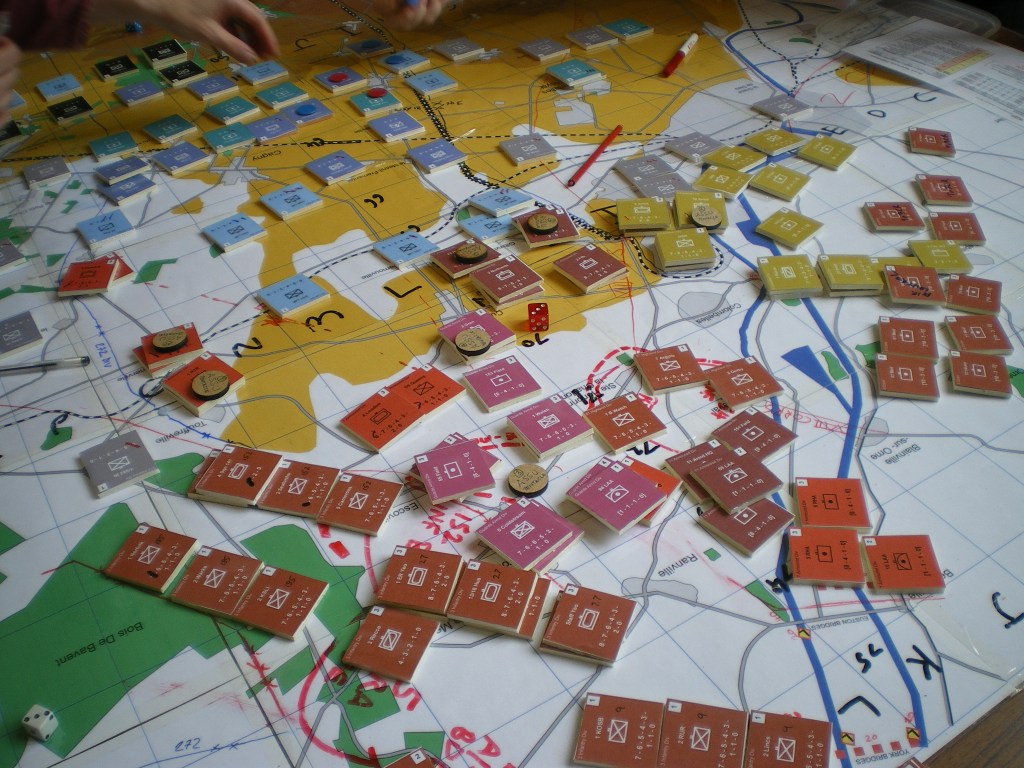
Using the 2-down principle, each Division would be issuing orders for battalions in their division – we therefore set the smallest unit represented in the game to be a battalion.

This meant a lot of players, a lot of map counters and a BIG map were going to be needed.

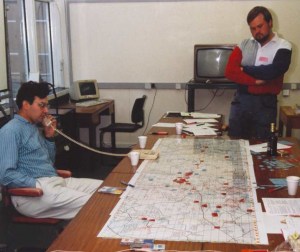
One of our players had access to a large plotter and they kindly generated our first map, the Control team version of which was about 5 metres long! Subsequent maps were drawn using fairly crude bitmap drawing packages of the day such as MS Paint.

We learnt a lot about producing lots of maps and counters. Control had a set of counters for their map, while players were given smaller maps covered in talcs (sheets of transparent plastic, not baby powder!) and issued with chinagraph pencils to do their own map-marking.

We discovered that even with players with previous experience on military map-marking, the quality of player-drawn map-marking left a lot to be desired! Accurate map marking of the sort practiced during the Second World War was fast becoming a lost art, even in the late 1980s and its all but gone now.

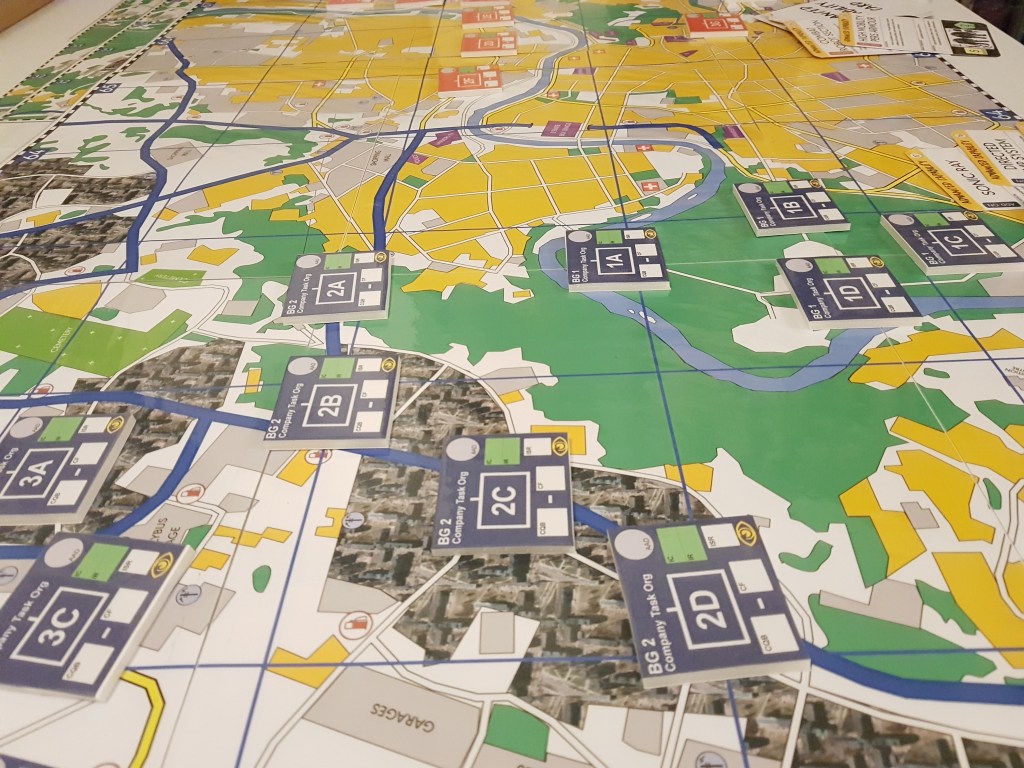
So in later versions we provided player teams with game counters to help them visualise their situation on the map.
Planning : Just One Day

For all sorts of good reasons the game had to be played in a single day. This meant the game design had to allow for enough gameplay to properly get the feel of the operation and enough ‘turns of the wheel’ for events to unfold.

Having about 6 hours of effective gameplay meant that we would be aiming to represent say, 6 days of the campaign (which is enough to find out whether the bridge at Arnhem can be taken and used). To represent the granularity of the battalion-level of operations we needed to split the day down into smaller time-slices. Initially we tried Morning – Afternoon – Night phases, but this was too difficult to do and took too long. So we have ended up with a 2-turn day, morning and afternoon, with night to be considered as an integral part of each turn.

This left us with the 30 minute turn.
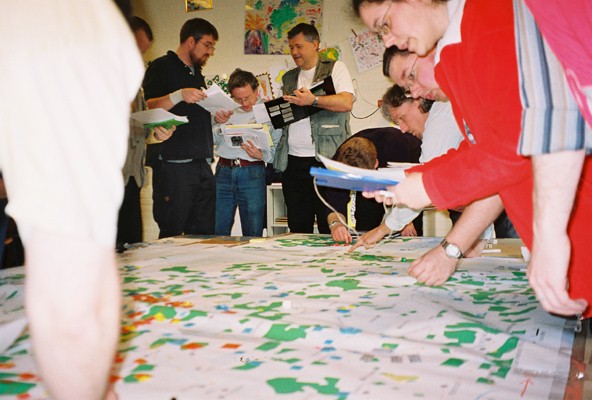
Speed of adjudication therefore became our primary game design consideration because the Control Team have to read and understand players’ orders, adjudicate outcomes and report back to players and still give the players time to digest reports and write their next orders.

A tall order.

Over time the rules became more streamlined, Control Team processes better thought through – helped by giving the control team opportunities to practice in advance of the game. Even with all this we still employ a dedicated Map Control person to keep everyone on the control team strictly to time. Maintaining the intense pace of the game is a key part of the player experience too. Seeing events unfold rapidly and being under time pressure really adds to the challenge and enjoyment.

Observations, Insights and Lessons

1. Keep it as simple as possible – master the right place in the game system for abstraction. Early versions has a beautifully complex logistics system. In a bid to be ‘realistic’ we researched usage rates, loads, tonnages, transportation etc. Not only was this level of complexity too much for the players and Control to cope with in 30 minutes, but it was not necessarily much more realistic in terms of whether it evoked the right decisions and trade-offs faced by commanders at the time, at the level were were playing at. Logistics is very important in this campaign so couldn’t be ignored, but we had to move much further towards simplification of accommodate it in a way that was sufficiently realistic to be useful.
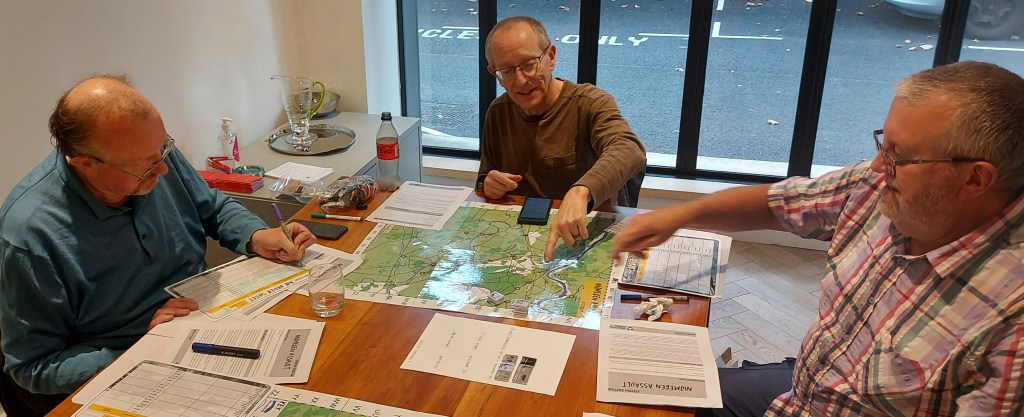
2. No Game Survives. Players will inevitably break things, either intentionally or unintentionally. If you expect this happen it makes is easier to deal with when it does. We discovered that sensitive player management was a useful skill on the Control team. We also leant a lot about calling out player behaviour when it was disruptive or inappropriate. We also learnt a lot about how to make the game material more accessible by resorting to plain English, explaining or avoiding jargon and acronyms (and my goodness there is a lot of jargon!). As game designers we often forget how much we know, especially after some deep research into a subject (“What do you mean what’s a Cab Rank – how can you not know that?”).

There are also players who are rules lawyers, pedants or nit-pickers. All of these have their place – for example sometimes a rules lawyer might usefully spot some unintended ambiguity in the rules. But sometimes these behaviours are just a player trying to ‘gain advantage by methods other than playing in-game‘ (GAMOTPiG). These methods can also include bullying and intimidation (or indeed can be a type of bullying). We’ve learnt (sometimes the hard way) that this must to be called out and shut down where it is harmful, or gently re-directed where it isn’t.

3. The ‘So What?’ Test. When creating the teams make sure there is actually a role for them. In the first games we had roles for the Dutch Resistance. Whilst the Resistance had a part to play in Market Garden it turned out that as a player role there was little agency for them in a huge multi-corps air-land battle. This can make for a dull day. So the test of team relevance is to ask yourself “what is this player (or players) going to actually DO each game turn.”.
JUST ONE ROAD

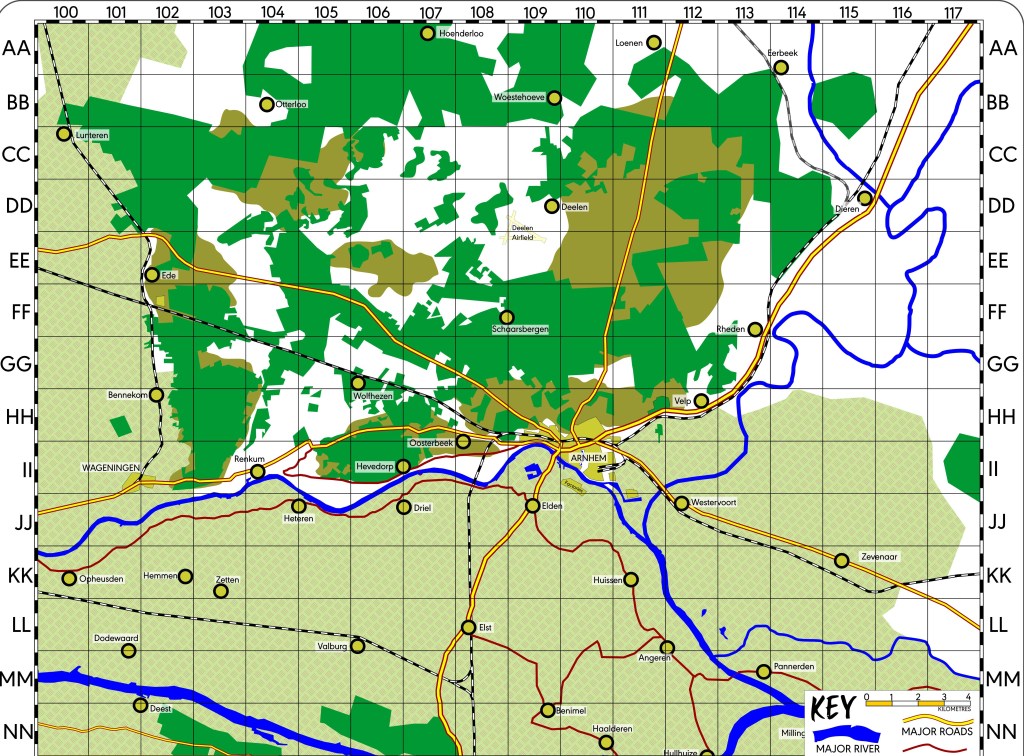
The original megagame has evolved considerably over the 37 years since the first primitive operational megagame was laid out in the Montgomery Wing. Its even been played a few times in the Netherlands.

The latest iteration of the game is called ‘Just One Road’ and is designed be a version for the connected world of the 21st Century and will be played in March 2025.

In this version, we are leveraging our more recent experience in on-line and hybrid wargaming by running the game simultaneously at a number of locations around the UK, and online, on the same day, and connected via a dedicated Discord server.

There will be three physical games, with maps and counters in Central London (representing the main ground offensive through Eindhoven), Bristol (playing the events around Nijmegen) and Nottingham (playing the battles near Arnhem). These games are held together by the High Command game (mostly corps commands, plus air forces), which is played by teams on-line.

If nothing else, this newest version with be chaotic, confusing and a huge challenge for players. What’s not to like!

For more information on JUST ONE ROAD.
Designing “In Case…”: A Crisis Preparedness Game

The idea for In Case… was inspired by the Swedish Government’s recently published public information leaflet, “In Case of Crisis or War,” which encourages citizens to think practically about preparedness. By turning this often daunting topic into an engaging game, we hoped to spark meaningful conversations and help individuals develop a sense of readiness.

The Inspiration: Practical Preparedness Meets Gamification

The Swedish government’s leaflet lays out practical advice for surviving crises such as armed conflict, natural disasters, and power outages. Its straightforward approach to preparedness resonated deeply, highlighting the gap between what people should know and what they do know.

The leaflet’s focus on actionable items—what to stockpile, how to communicate during a crisis, and how to stay safe—formed the conceptual backbone of In Case…. We realised that gamifying this information could bridge the gap between passive awareness and active engagement, encouraging people to critically assess their own preparedness in a non-intimidating way.

The Concept: A Game About Conversations and Choices

From the outset, In Case… was designed to be more than just a game. Its primary purpose is to foster conversations, spark creativity, and encourage practical thinking. The challenge was to create a framework that was simple enough for non-gamers but engaging enough to hold everyone’s interest. The gameplay needed to strike a balance between realism and flexibility, allowing for imaginative solutions while grounding decisions in practical preparedness principles.

At its core, the game involves two types of cards:

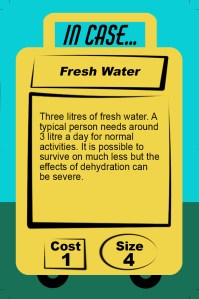
  1. Item Cards – Representing a range of practical tools and supplies, from water purification tablets to sleeping bags. Each card has a “size” and “cost,” reflecting its real-life limitations.
  2. Event Cards – Scenarios ranging from earthquakes to cyberattacks, each outlining a crisis and its potential challenges.

Players assess their real-life resources, build hypothetical “escape packs,” and use them to navigate various crises. The game incorporates resource constraints, mirroring real-world challenges where not everything you want can fit in your bag—or your budget.

Building the List: Identifying Key Items

The first step in the design process was to compile a comprehensive list of items that might be useful across different crises. This involved research into emergency preparedness guides, including:

  • Government-issued resources like Sweden’s leaflet and FEMA’s recommendations.
  • Personal survivalist blogs and forums.
  • Input from disaster response professionals.

We aimed to balance everyday items (e.g., mobile phones, cash) with specialised survival tools (e.g., water purification systems, fire starters). The final list included over 70 items, reflecting a wide range of needs, from basic survival to community-level contributions without become too large a list for player to grasp easily.

Each item was assigned a “size” (how much weight/space it would take in a pack) and a “cost” (a relative value to simulate resource prioritisation). These mechanics add a strategic layer, challenging players to weigh convenience, necessity, and practicality.

Designing the Crises: Exploring Real-World Scenarios

Next came the development of the Event Cards. These were inspired by real-world crises, divided into broad categories:

  • Environmental Disasters: Earthquakes, floods, wildfires, and hurricanes.
  • Technological Disruptions: Cyberattacks on power grids, water supplies, or banking systems.
  • Societal Challenges: Economic collapse, armed conflict, and pandemics.

Each scenario was designed to be plausible yet varied, highlighting different aspects of preparedness. For example:

  • An earthquake emphasises immediate survival tools like first aid kits and torches.
  • A cyberattack on water supplies makes water purification systems critical.
  • A pandemic underscores the importance of hygiene and medical supplies.

The Event Cards also encourage players to think about community-level responses, prompting discussions about how neighbours might collaborate in difficult times. The idea here is to think of the crisis as ‘non zero sum’ – its is not just about our personal mitigations but how we fit in with our community in a crisis.

Testing and Refining the Game

With the core mechanics and components in place, the next step was playtesting. A diverse group of testers—ranging from avid gamers to complete novices—helped refine the game. Their feedback revealed key insights:

  1. Accessibility is crucial. Non-gamers appreciated the simple mechanics and conversational focus, which made the game feel more like a collaborative exercise than a competitive challenge.
  2. People enjoy discovering their strengths. Many players were surprised to find that they already owned several preparedness items, sparking pride and further interest in the topic.
  3. Discussions are as valuable as gameplay. Testers noted that the conversations prompted by the game often continued long after the session, encouraging deeper thinking about personal and community resilience.

Based on this feedback, we developed the rules further (mainly simplification), ensured the crises were relatable, and fine-tuned the item descriptions to include subtle hints about their usefulness.

Why This Game Matters: Impact and Potential

It is looking like In Case… has the potential to appeal to a wide audience, from families to community groups, educators, and even workplace teams. Its flexibility makes it suitable for different contexts:

  • Families: The game can help parents and children discuss preparedness in a non-scary, engaging way.
  • Schools: Teachers can use it as a tool to explore topics like resource management, geography, and social studies.
  • Workplaces: Teams can use the game to build collaboration and problem-solving skills.
  • Emergency Preparedness Groups: The game provides a structured yet fun way to educate communities about crisis planning.

The game also promotes practical action. By encouraging players to assess their real-life resources, it bridges the gap between theory and practice, inspiring people who might be concerned about an increasing volatile world to start building their resilience.

Lessons Learned from the Design Process

  1. Collaboration is Key: The game’s cooperative nature mirrors real-life crisis responses, emphasising the importance of teamwork and community.
  2. Relatability Matters: By focusing on everyday items and plausible scenarios, the game feels relevant to players’ lives, increasing its impact.
  3. Simplicity is Powerful: Easy-to-learn mechanics ensure that anyone, regardless of gaming experience, can participate and benefit.

Looking Ahead: Expanding the Game’s Reach

The positive initial response to In Case… suggests that it has significant potential for growth. Se are planning to make this available both in a physical form and as a downloadable print & play format on the Stone Paper Scissors website in the next few weeks. We’ve also been inspired already to consider some interesting future developments such as:

  • Expansion Packs: Additional crises and specialised item sets (e.g., urban versus rural preparedness).
  • Digital Version: An app-based version could reach a global audience and incorporate interactive features like personalised crisis simulations.
  • Workshops and Training: Partnering with emergency preparedness organisations to use the game as part of educational initiatives.

Conclusion: Preparedness Through Play

In Case… is turning out to be more than just a game—it’s a tool for fostering awareness, building resilience, and strengthening community ties. By encouraging players to think critically about their resources and strategies, it potentially empowers them to face uncertainty with confidence.

Operational Map Wargaming

One of the most interesting, and perhaps under-represented, form of recreational wargaming is the operational map wargame.

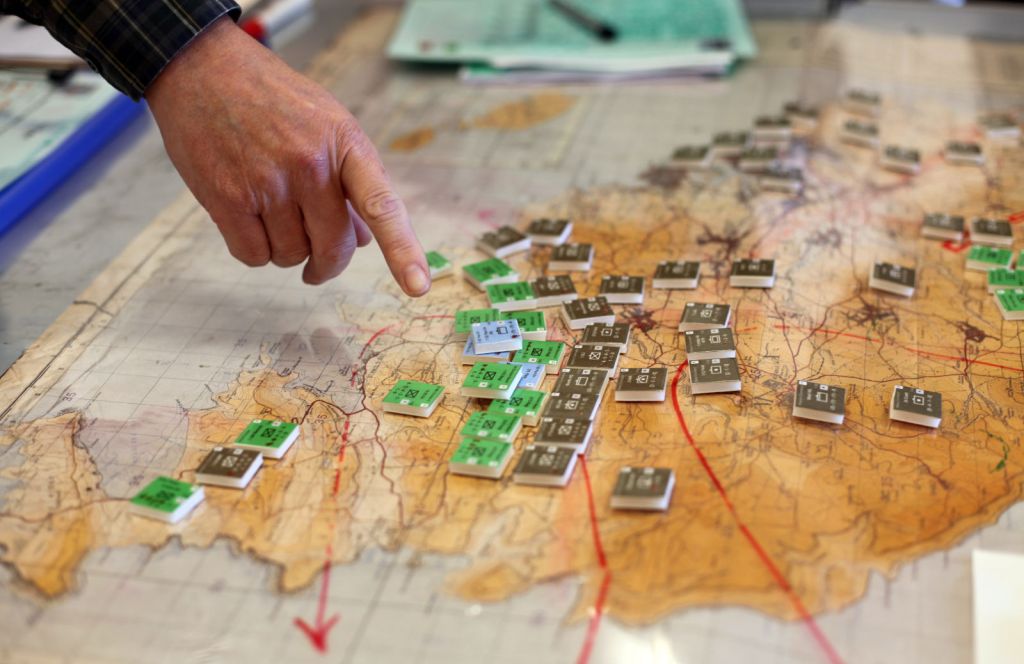
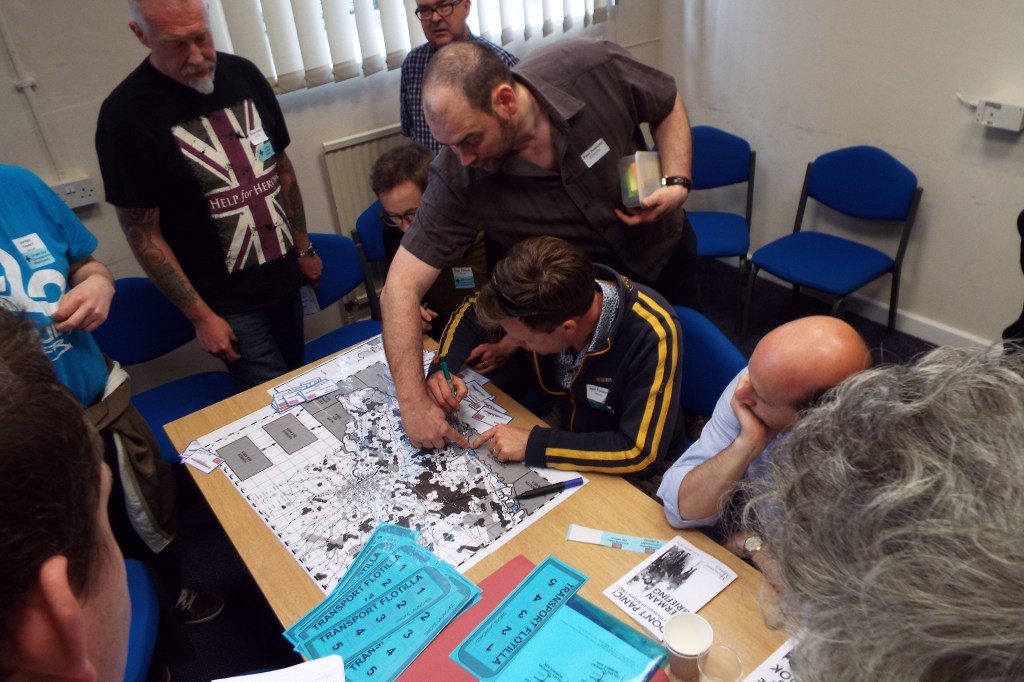
Photo : Tom Mouat

Originally migrating from the professional space to recreational gaming in the 1970s (thanks to, among others, the efforts of Dr Paddy Griffith) the notion of a wargame that did not involve lovingly painted toy soldiers was something of a radical notion. At about the same time, the Reisswitz Kriegspiel was rediscovered by recreational wargames (thanks to the efforts of Bill Leeson and Arthur Harman among others). At the same time members of the London Wargames Section were increasingly experimenting with the important concept of double blind wargames, especially for the Second World War and later periods. The double blind approach turned out to be essential for any realistic operational wargame.

Somewhat ironically, in the professional space the idea of a double blind wargame involving paper maps fell out of favour starting around the same time. Instead,computer simulation became the norm for a number of decades and adversarial wargaming itself entered something a fallow period until the early 21st century, where an appreciation of the flexibility and (importantly) low cost of manual map wargames became attractive once again. To my mind the sea-change in the acceptance of adversarial professional wargaming is marked by the official publication of the MoD’s first ever official Wargaming Handbook in 2014.

I must mention board wargames in this context. Very similar to operational map wargames in many respects, hex-map and counters board wargames have been highly successful in the recreational space since the 1960s. However, no matter how complicated, elaborate, large, small and/or imaginative these games have been they can usually be differentiated from the Operational Map Game (OMG) in a number ways:

  • They generally represent the terrain of the battlespace using a highly abstracted grid system – hexagons, squares, pre-defined areas or specified ‘points’.
  • They are generally open games – that is all or most of the situation is exposed to both sides in the game. Some game have ‘decoy’ counters, or other attempts to create a small element of ‘fog of war’, but it is rare to find a true double-blind board wargame.
  • They are designed for relatively few participants (two is common, six or more are much less frequent).
  • They are balanced so that any of the players has a chance to ‘win’, in fact rigidly deciding who won or lost in some measured way might be a defining characteristic of the genre.
  • The players implement all the rules and procedures of the game themselves based on often highly detailed written instructions.
  • They operate an ‘I Go – You Go’ (IGYG) structure (like simple boardgames such as draughts, ludo or monopoly).

The Operational Map Game by contrast can be characterised:

  • Real maps. In the original 1970s games the maps were covered in transparent plastic (‘talc’) and units marked on using standard map symbols using chinagraph pencils. At the time this was a close analogy to how real-world military operations were planned (and how operations were conducted in the past, i.e. in the Second World War). In later years the hand-written map marking practice has become replaced by map scale-sized game counters as it was found that most recreational gamers struggle with the discipline of effective physical map-marking.
  • Multiple players, often reflecting real hierarchies of command. OMGs often have multiple levels of command, and teams of players, each team replicating some aspects of a headquarters.
  • Double-blind. OMGs only work properly if they are double-blind – typically the ‘three map’ model. The realistic fog of war created by this method is essential to the conduct of a successful OMG. Naturally with more player teams, the double-blind aspect is extended to knowing what friendly forces are doing as well as adversaries – thus it is common to separate out player teams representing formation on the same side and realistically restricting communication between them.
  • Facilitated by a neutral Control. Often the best OMGs do not need the players to implement the rules at all and adjudication is conducted by one of more Controls. Players then concentrate on thinking about their situations, capabilities and decisions rather than how to implement game abstractions codified in the rules.
  • Simulation rather than ‘winning’. Regular players of OMG tend to be less interested in an absolute sense of winning or losing, but rather on the experience of a challenging and realistic problem-set. In the recreational space these are often themed around real-world historical conflicts and players get interest and enjoyment from measuring their performance against that of their historical prototypes. An added bonus is that realistic asymmetric historical or real-world game scenarios are eminently playable without needing to arbitrary and often unrealistic ‘game balance’.
  • Social interaction. Because it involves teams working together to achieve a common goal, there is a lot of camaraderie among players, as well as respect for their opponents. At the end of OMG there is always a debrief phase where both sides get to chat and see how the wargame went from ’the other side of the hill’. Often these debriefs are entertaining (or even educational) as Control reveals what was really going on.
  • Simultaneous play. In OMG the action in each turn is simultaneous – they do not need to work on an ‘I Go – You Go’ (IGYG) structure because they are closed games and each side not only doesn’t know what the other side are doing, but also do not have to wait while the adversary deliberates on their ‘move’. Unlike the IGYG structure, this enables teams to get inside their opponent’s ‘OODA loop’ and simulates reality where the enemy does not wait for your ‘go’ to finish.

OMG Structure

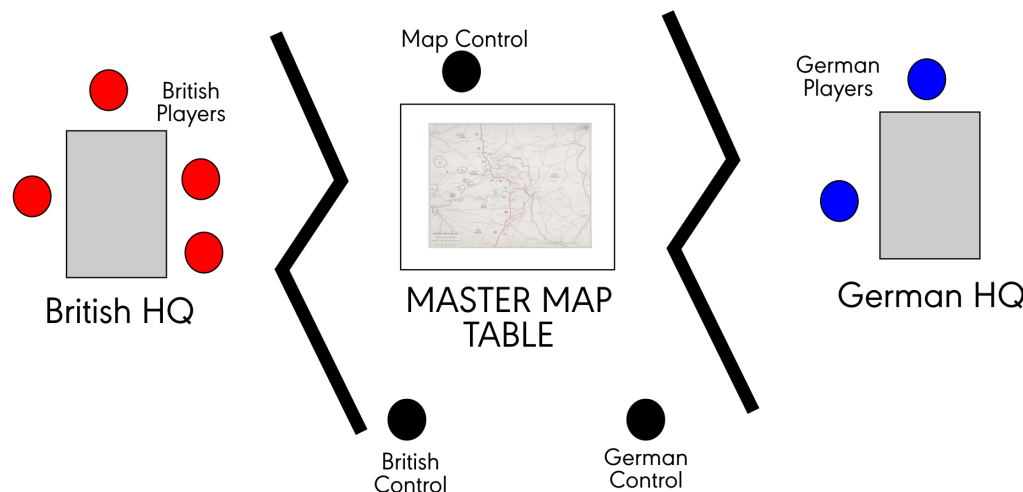
In its simplest form the classic ‘three room game’ (which is the main structure of OMGs) looks something like this:

The two sides have their own space with maps and a member of the Control team (known as Team Control) facilitating them. In the middle is the Master Map with Control adjudicators (known as Map Control).

Each player team maintains their own map, and updates it based on reports received from Control This might be brought to them by their Team Control, or transmitted via messaging systems from Map Control (or, indeed, a combination of the two).

Player teams submit orders (typically in a brief written form) to Control which then uses them, and the game rules & procedures to update the status and positioning of units on the main map, and create a narrative of events to report back to the player teams.

This basic structure works very well for two sides, and can easily be expanded for more complex operations involving multiple formations on each side. And separate rooms are not an absolute necessity, so long as the teams cannot see the master map and do not overlook or overheard their adversaries. In some of the simplest games placing players seated with their backs to the master map can suffice!

Time

In order to create genuine tension and simulate real-life frictions, the OMG only allows players a fixed amount of time to communication, discussion and to decide on and issue orders. A game with unlimited time for players to decide on their actions quickly comes to a halt and becomes deeply boring for most of the participants. The pace of an OMG has to be fairly finely judged depending on the complexity of the situation and the amount of intercommunication player teams need to do. We have found that 20 minutes is the minimum practical time, and around an hour the maximum. In that time, adjudication must be as rapid as possible and should not take up more than an absolute maximum of about a third of the time allocated to a turn, to give player the best chance of having time to think about their actions, communicate and write their orders.

Communication

In a typical multi-team OMG players communicate between teams to share information and coordinate plans and operations. This can be one of the most challenging and entertaining parts, and in some games the game rules impose limits on how much, or in what form, this communication happens. In an historical period prior to the invention of radio this might be only via written notes. In era where more advanced technology is available teams might use means such as Discord or Zoom to simulate real-world communication.

Orders

Whilst it would be easy for players to simply tell Control what they intend to do the OMG works best with written orders. These are necessarily simplified when compared with the process of writing real-world military orders, but capture the flavour of order writing. We tend to use standard proformas to help players to include all the information Map Control will need to adjudicate and update the master map consistently. Ideally this needs to reflect, even in abstract form, information that is relevent to the context. So in an historical game guide players with options that reflect the operational practice of the period, and avoid anachronism.

Adjudication & Reporting

Speed of adjudication. As mentioned above, map adjudication must be both accurate and speedy. Nothing de-motivates players more than sending in their orders then waiting for an hour of relative inactivity to find out what happed, while the Control team are in huddle elsewhere around the master map apparently enjoying their own private game.

There is a clear balance here between detail and speed – and whatever rules & procedures you use these must be measured against actual in-game processing. A common elephant trap in this regard is the game designer underestimating time needed for their Control team to master a system that seems perfectly easy to the person who designed it. Everything takes longer than you think. If you have allowed, say 10 minutes fr adjudication, your rules and & procedures should be designed to take only five minutes (or even less) to process.

In my experience adapting game systems designed for face to face play (for example from a board wargame) is likely to be inappropriately slow. In most cases it is best to use something specifically designed for OMGs.

Rigid versus free adjudication. There are considerable advantages to having a consistent, codified set of rules & procedures for your game. Not least because it allows multiple Controls to assist with adjudication. However, there are times when ‘free adjudication’ can usefully be used, especially when your Control team includes experienced subject matter experts. Often the abstracted system your used needs to be very granular and situation might arise that are not well represented by the rules. In this case Control can make a judgement on the outcome without reference to any rules. Whilst it is entirely possible to run all the adjudication in this way (with the right control team), and might seem an easy option I do not recommend it as it can be harder to maintain consistency ad is dependent on the credibility and expertise of the Control team.

Black box adjudication. In the standard OMG the adjudication process is entirely in a ‘black box’ in that the players are not given the entirety adjudication rules. We generally give them information on the underlying assumptions in those rules. So we might say “Tanks have an advantage over infantry in open country” but notTanks get +4 in combat resolution when fighting infantry in the open”. Interestingly I have observed that players often ascribe considerable subtlety to the results that might actually not be part of the adjudication process – post-hoc rationalisation being a significant human behavioural trait. “Ah yes, the enemy’s action must have failed because T34 tanks can’t fire their guns to their rear”.

Creating a believable narrative. Whatever system of adjudication you use they primary output is to create a credible narrative of events generated by the game. If players cease their willing suspension of disbelief then Control (or the game system) risks becoming an adversary rather than the other played teams. We teach Team Controls to report in the form of a narrative report describing in general terms the following things:

  • Achievement of their intent (as expressed in their game orders)
  • Status and position of their own units. This might not be completely accurate. However they would very likely know if the unit has taken heavy or light casualties
  • Current Capability of their own units. An assessment of the unit’s ability to do more actions – is it exhausted or can it press on, for example.
  • What they would reasonably know about the enemy their units are facing. In some cases there would be obvious clues – for example if the enemy have tanks then that would be reported. Or if the enemy was using artillery… and so on.

The reports would never be expressed in game-type metrics. So Team Control would never say “7th Battalion has lost 3 strength points and now has a combat factor of 2”. This might instead be expressed as “7th Battalion has taken significant losses and is not confident in its ability to continue the attack

The important thing here is that the players feel they are immersed in the experience of commanding their units in the game. If they don’t believe that the results make sense, or seem arbitrary and inconsistent then this needs to be quickly corrected by Control, ideally by providing more information. Often the problem arises because some vital piece of information has been omitted (“You didn’t tell us that 12th Brigade has run out of supplies! That explains why the attack failed”). Of course errors or omissions by Control can be explained away as ‘fog of war’ or communications breakdowns, but this excuse should not be used too often.

Debriefing & Feedback

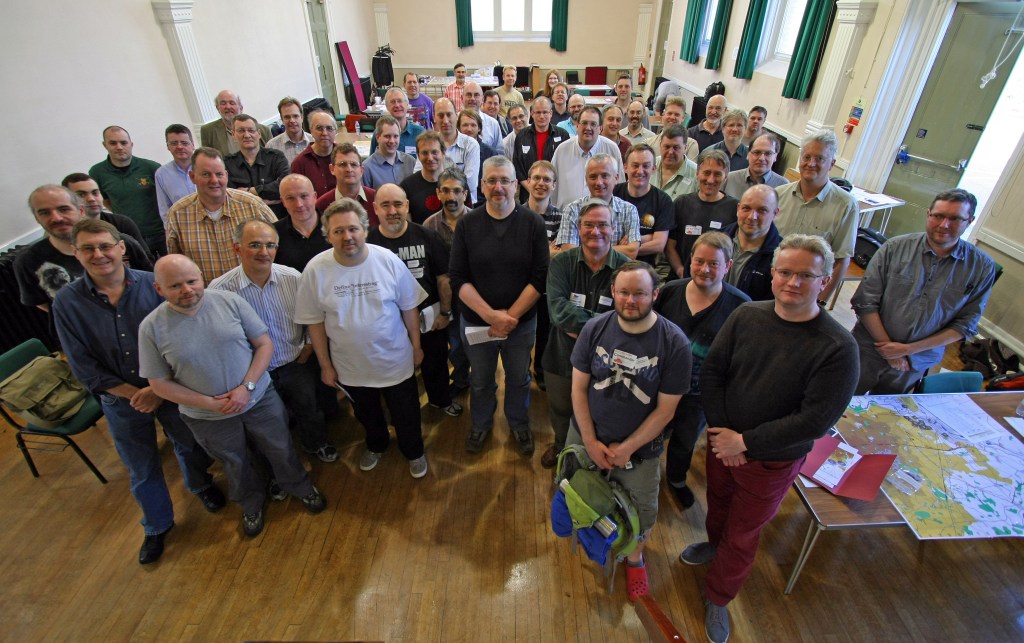
Allowing time for a plenary session at the end of the game is essential for creating opportunities for players’ stories to be heard. Quite apart from any simulation aspects, these wargames are, above all, anecdote generators, and player derive much of the pleasure of the experience in recounting that experience.

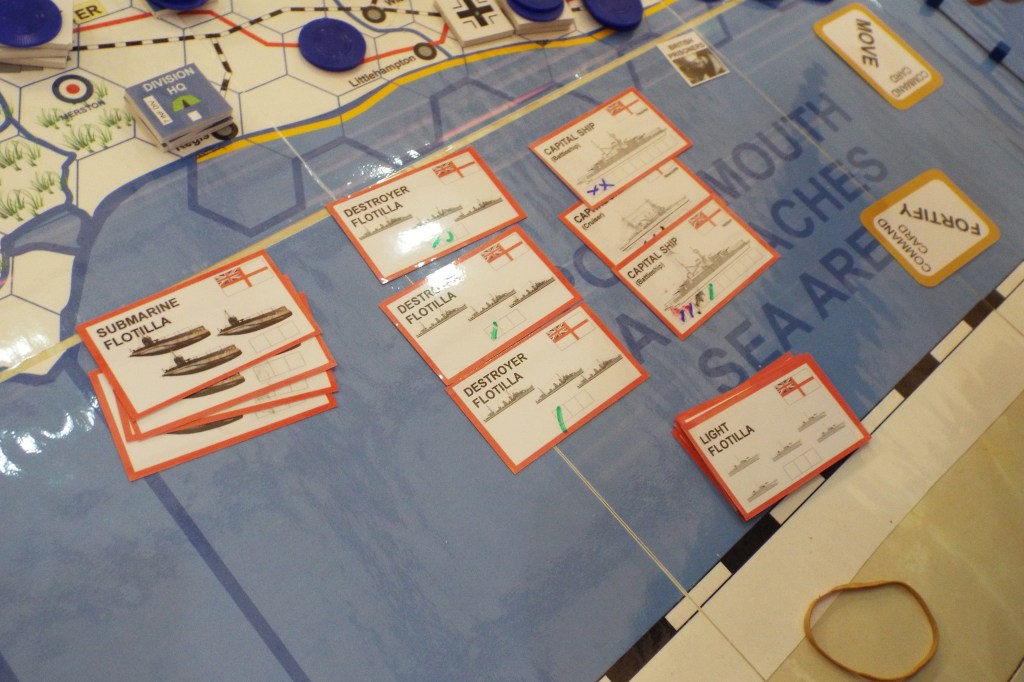
PHOTO : Tom Mouat

The other aspect of the post-game debrief is giving the players a chance to ‘peep behind the curtain’ and see the master map and get a sense of the actual situation, kept form them for most of the game. Allow this chance to just go and look at the master map.

The other opportunity the post-game debriefing session provides is the opportunity for the game designer and control team to hear player feedback on the game as an experience. This is a place for the organisers to listen to players’ feedback. I always advise that the organisers just listen and take note of what comes up and at all costs avoid becoming defensive when criticism comes up from the players – whether or not you agree or feel their comments are fair. Being defensive isn’t necessary and isn’t a good look for an event that is, after all, fun and about the player experience.

To Summarise…

So, Operational Map Wargaming (OMG) offers a immersive style of play that emphasises a good degree of realism, teamwork, and historical simulation. OMGs are distinguished by their use of real maps, multiple layers of command, and reliance on Control teams for rule adjudication, keeping players focused on strategy. OMGs foster a challenging simulation that minimises the pursuit of winning in favour of creating an authentic experience, often involving real-world scenarios. With a focus on simultaneous, rather than turn-based, play, OMGs allow teams to coordinate and communicate under time constraints, mirroring real-world military pressures. The structured adjudication, communication challenges, and immersive narrative make OMGs a rewarding, (and sometimes educational) experience, blending teamwork, camaraderie with the challenge of operational command.

WARGAMING MILITARY DECEPTION

A subject that has been interesting me in recent months has been how to wargame military deception effectively in the professional wargaming setting. I thought it might be useful to expose my thinking and, hopefully get feedback.

Military Deception is being used here in the sense of ‘deliberate measures to mislead targeted decision-makers into behaving in a manner advantageous to the commander’s objectives’.1

Wargaming being defined as ‘A scenario-based warfare model in which the outcome and sequence of events affect, and are affected by, the decisions made by the players’2

Wargaming will be used here to mean professional wargames developed with a serious intent, primarily in order to develop insights, conduct research or hone operational skills and conducted with participants with a professional interest in the conduct and outcome of the wargame.

Whilst games for an education or training purpose would also qualify I am not going to consider those here. Similarly I am excluding recreational wargames (thought there is no doubt overlap in all of these cases).

Approaches to Wargaming

There is a widespread popular understanding that ‘deception’ includes lying, cheating or otherwise bamboozling the other players in your game. There are many games and shows in popular culture that hold the ‘traitor mechanic’ as core part of their interactions of the participants3.

However, whilst dishonest or traitorous behaviour in recreational games might be shoe-horned into the definition of Military Deception above, I argue that this is too simplistic. In addition there is, conceptually at least, a significant difference between military deception and ‘perfidy’4. That is not to say that real-world adversaries might not act in way contrary to international conventions, and this has to be taken into account at some stage. At present I’m looking at how, within existing wargames military deception, as described in current NATO doctrine, can be usefully applied to wargames.

In the professional wargaming context there are a number strands of activity where deception plays its part and which we might usefully include in wargames:

a. Playing the Player. Game activities that are designed to deceive the players in the opposing team in a wargame.

b. Replicating Deception Effects. Game rules and procedures that model the application and effect of military deception on elements in the game not represented by players (Non-Played Elements).

c. Meta-Deception. Where the game structure and design itself deceives the players in order to achieve an effect. (for example ‘disguised scenarios’). Sometimes this happens by ‘accident’5.

Playing the Player

The cut and thrust of adversarial wargaming enables gameplay that includes aspect of deception. However the object of this deception is the enemy ‘commander’ – i.e. another player in the game. That player may or may not be personally known to their enemy, but they are often part of the same organisation, society or culture. And as such they may well be far better understood than many real-life adversaries.

Successful deception of a played adversary in our wargame runs the risk of:

a. Telling us nothing about how applying deception doctrine might work against a real adversary from a different cultural environment.

b. Becoming merely a ‘game’ of outwitting the other player – especially if that player is known to you. “Ha! I really fooled Charles this time!”. Or, worse, hold back on deception activity so as not to embarrass the adversary player who might be more senior.

c. Because of a. and b. above insights may be deeply flawed, especially in the context of a wargame designed to generate insights or conduct research.

d. Data capture is fraught with difficulty because in order to establish the effectiveness of deception the players who may have been deceived have to admit to having been deceived. Human nature being what it is (especially in hierarchical organisations) there may be a reluctance to admit to weakness or failure – even in the ‘safe to fail’ environment of a wargame.

It is entirely possible, and possibly useful, to conduct wargames where the deception activity is focussed on deceiving the enemy players. However, there is nothing special about such a wargame – it requires nothing more, structurally, than any other wargame. The main change are the decisions of the players and their ability to use military deception doctrine successfully in the their planning an execution of those plans.

Replicating Deception Effects

This is an area where there is significant opportunity for development of new models, methods and tools (MMT).

There are already many MMT to describe and adjudicate the effect of weapons and military units and, increasingly, ‘soft’ factors like information & influence operations and will to fight.

The task here is to develop game systems to enable a wargame to show the effects of military deception on Non-Played Entities (NPE).

For example the smallest NPE in a map and counter wargame might be a game counter representing a battalion. When that game counter moves to attack an enemy counter we make a set of assumptions about how that battalion will fight – and these are baked into metrics of unit capability and effectiveness. These factors are then applied using the game rules and procedures to determine probability of success.

Within the model of the capability of the game counter will be assumptions about how well led it is and what tactical decisions the imaginary battalion commander is taking – these are all well below the resolution of the game, but conceptually they are factors taken into account in building the wargame orders of battle and unit statistics.

Any reflection of military deception at this level requires us to have a model of the process of deception. Military deception does not include operations security (OPSEC)6 – here we are concerned with what one might term ‘Active Deception’ as distinct from ‘hiding’.

There are many actions our imaginary battalion commander (in charge of a little game counter) might be taking at the tactical level to implement a deception plan. We are not interested in these (in the same way that we are not interested in how they might be deploying their companies or tasking their mortar platoon) – what we might be interested in is:

a. How capable is the battalion commander at employing military deception (e.g. have they read and practised their deception doctrine), and how imaginative / flexible are they?. This may be a wider question about how well trained the army they are part of is, as distinct from profiling all the tiny commanders of each game counter.

b. Are there realistic opportunities to use deception? The circumstances and environment might not be conducive to military deception. This might be something to do with terrain, or the orders the unit has been given, or the time available to develop a deception activity (these often take time to prepare and implement in real life).

c. The enemy gets a vote. Unlike kinetic fires, which have a generally consistent effect on any enemy unit in similar situations, the effect of deception is on the enemy commander. This means that it doesn’t matter how carefully crafted our tiny commander’s deception activity is, the unit commander they are facing might still not be fooled. Perhaps every counter is given a gullibility rating? But of course the gullibility of an adversary is entirely unpredictable. Behavioural science can give us considerable insights into this in building our model of ‘deceptive interactions’.

d. Finally, identifying the effects of deception. Does successful deception just mean “plus one” to the combat result, or are there other, more qualitative, effects? It is important to consider how deception changes behaviours and how this is reflected in our model.

This approach – building a model of how military deception activity might operate at the low level yields some interesting potential MMT that can be written into existing game rules and procedures so that deception is integrated into conventional wargaming seamlessly.

Especially interesting for me is the question of how does successful military deception manifest at each level? It may well be that the application of deception at battalion level might look qualitatively different to it being applied at brigade or even divisional level (where brigade or division is your level of a non-played entity).

Meta Deception

I don’t propose to discuss this in any detail, especially as Stephen Downs-Martin has written extensively and convincingly on the subject of malign wargaming in the professional space.

However, there is potentially a place for disguised scenarios as a tool for developing insights without players using ‘20/20 Hindsight’ and approaching subjects under examination with fresh eyes. Whilst strictly speaking this fall outside military deception doctrinally, the principles of deception, if applied consciously and in a rigorous way, can be applied to test players intellectually and generate insights – though care must be taken to use deception in this context that it does not pre-load the decisions of the players to force particular insights.

Ultimately the aim of any wargame must be to open out thinking in new directions and encourage meaningful insights.

Footnotes

1 Allied Joint Publication, AJP-3.10.2, Edition A, Version 2, ALLIED JOINT DOCTRINE FOR OPERATIONS SECURITY AND DECEPTION

2 MOD Wargaming Handbook.

3 2021 ‘De Verraders’ on Dutch TV channel RTL4 or 2008 ‘Battlestar Galactica: The Board Game’ created by Corey Konieczka

4 Perfidy is understood as deception that falls outside the provisions of international Laws of Armed Conflict such as the Geneva Convention 1949.

5 ‘Preference Reversal Effects and Wargaming’, Stephen Downes-Martin 2020

6 OPSEC is defined as: ‘the process that gives a military operation or exercise appropriate security, using passive or active means, to deny an adversary knowledge of the essential elements of friendly information, or indicators of them’ (AJP 3.10.2)